

How to Select the Best Golf Irons for Low Handicappers on a Budget this Spring Season After Easter
⚡ Quick Answer
If you're a low handicapper hunting for a new set of irons before the spring golf season kicks into high gear, you're facing a genuine dilemma: modern equipment marketing wants you to believe you need to drop $2,000+ on the latest cavity-back technology to shoot good scores. The truth? That's not how equipment actually works for golfers who already have solid swings. What matters for a 2 to 8 handicap golfer isn't flashy paint jobs or Instagram-friendly club heads—it's consistent ball-striking characteristics, workability, and knowing the difference between marginal performance gains and pure marketing noise.
Table of Contents
Over my years on the teaching range, I've seen single-digit handicappers obsess over 5-yard distance gains that don't exist while ignoring $300 used irons that would cut their scores. This guide cuts through the hype. You'll learn what actually improves scoring for a golfer with your skill level, which features are pure marketing, where to find legitimate deals after Easter when retailers clear inventory, and how to evaluate trade-ins and used equipment like a professional would. By the end, you'll have a framework for making a smart iron decision that doesn't blow the budget.
Our Top Picks in Detail
Affiliate disclosure: if you buy through these links, we may earn a commission at no extra cost to you.

BombTech Golf - One Iron - Launch Low Piercing Bombs with Ease (Regular)
$89.0Check Price →This is the pick to look at first if you want a reliable, well-rounded option that handles everyday use without unnecessary compromises. BombTech Golf - One Iron - Launch Low Piercing Bombs with Ease (Regular) delivers solid performance across the features that matter most in this category.
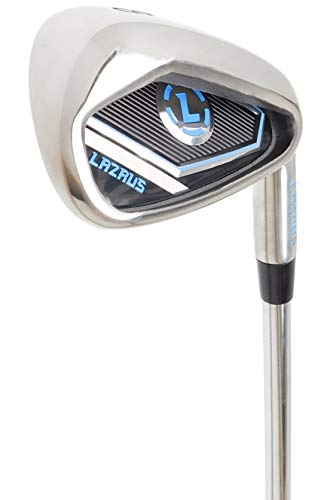
LAZRUS Premium Golf Irons Individual or Golf Irons Set for Men (4,5,6,7,8,9) Driving Irons (2&3) Right Hand Steel Shaft Regular Flex Golf Clubs - Best Golf Iron Set - Great Golf Gift (7 Iron)
$69.99Check Price →If the top pick doesn't quite fit your situation, LAZRUS Premium Golf Irons Individual or Golf Irons Set for Men (4,5,6,7,8,9) Driving Irons (2&3) Right Hand Steel Shaft Regular Flex Golf Clubs - Best Golf Iron Set - Great Golf Gift (7 Iron) is worth a close look as a capable alternative that still covers the essentials well.
LAZRUS Premium Golf Irons Individual or Golf Irons Set for Men (4,5,6,7,8,9) Driving Irons (2&3) Right Hand Steel Shaft Regular Flex Golf Clubs - Best Golf Iron Set - Great Golf Gift (5 Iron)
$69.99Check Price →For buyers who want the most for their money without sacrificing the features that actually matter, LAZRUS Premium Golf Irons Individual or Golf Irons Set for Men (4,5,6,7,8,9) Driving Irons (2&3) Right Hand Steel Shaft Regular Flex Golf Clubs - Best Golf Iron Set - Great Golf Gift (5 Iron) is the practical choice at this price point.
Understanding What Low Handicappers Actually Need in Irons
Let me be direct: the iron you swing is less important to your handicap than you think. I've watched 5-handicap golfers shoot 78 with 15-year-old Titleist MB irons and 82 with brand-new Mizuno Pro irons. The difference? Shot-making and course management, not equipment. That said, the right irons for your skill level will support consistency in a specific way that matters more than most marketing acknowledges.
As a low handicapper, you have a repeatable swing. You can flush a 6-iron consistently and expect it to go to a similar yardage every time. What you need from irons is precision feedback and workability. Precision feedback means the club tells you immediately when you've hit it slightly off-center—a softer, less forgiving head will feel distinctly different on a pure strike versus a miss, which helps you dial in swing mechanics. Workability means the irons should allow you to shape shots left and right, hit different trajectories, and control distances within your swing's natural parameters. A low handicapper needs to hit a 7-iron 158 yards one day and 150 yards the next, depending on conditions and strategy. Game-improver irons with 25-30 grams of tungsten in the toe don't support that kind of shot-making as naturally.
The launch angle and spin rate numbers you see in marketing materials? They matter far less than magazine reviews suggest. A properly fitted iron in your hands will have appropriate launch angle for your swing speed and angle of attack. If you're swinging 85 mph at a 6-iron and the club launches at 18 degrees with 7,200 RPM spin, that's fine. It doesn't matter if the new model launches at 16 degrees with 6,800 RPM—the differences are marginal and won't change your scoring unless you're a tour pro optimizing for absolute distance optimization.
The Real Difference Between Player's Irons and Game-Improver Irons
This distinction matters more than price. Player's irons (sometimes called "players' clubs" or "tour irons") are typically smaller heads with thinner clubfaces, less perimeter weighting, and a center of gravity positioned for control rather than forgiveness. Game-improver irons have larger clubheads, thicker faces with more springback effect, tungsten weighting that pushes the center of gravity low and deep, and perimeter weighting to reduce miss-hit penalties. For a low handicapper, the choice isn't binary—it's about where on that spectrum you want to live.
A true players' iron like the Titleist T100 or Mizuno Pro will give you superior feedback and shot-shaping capability. You'll feel the difference between a flush strike at the sweet spot and one that's a half-inch off-center. That feedback is valuable for someone with your handicap because it helps you make mechanical adjustments. The trade-off? Missed shots are more punished. A strike an inch off the toe loses noticeably more distance and accuracy than it would in a game-improver model. For single-digit handicappers who hit 60-70% of fairways and can repeat a swing, that's an acceptable trade.
Cavity-back irons designed specifically for low handicappers—like the Srixon Z-Forged or Ping i210—exist in a middle ground. They have softer feel and better feedback than pure game-improver designs, but with enough perimeter weighting to keep a slight mishit from completely falling off line. They're genuinely useful for low handicappers because they support shot-shaping without punishing the occasional imperfect strike. The size and appearance are also more compact, which affects confidence over the ball—a real factor that magazine tests ignore.
Here's what matters: don't assume you need true tour-level irons just because you're a single-digit handicapper. A well-designed cavity-back iron for low handicappers will almost always outperform a tour iron in your hands unless you have exceptional ball-striking consistency. I taught a 2-handicap golfer who switched from Mizuno MB irons to Ping i500s and his scores actually improved because the irons were more forgiving on his slightly off-center strikes during tournament pressure. He didn't lose shot-making ability; he gained consistency.
Where Budget Really Matters and Where It Doesn't
Golf equipment marketing works by convincing you that the newest model is materially better than last year's. The reality: iron technology improved dramatically from 2005 to 2015. Since 2018, improvements have been marginal. A set of irons from 2019 will perform virtually identically to a 2024 model in your hands, assuming similar forgiveness level and design category. This is where budget discipline actually saves your game—you can get 95% of the performance at 40% of the cost by shopping models that are 3-5 years old.
Shaft selection is where low handicappers should absolutely not cut corners. This is the inverse of typical equipment hierarchy—most golfers obsess over clubheads and ignore shafts, but shaft flex, weight, and torque characteristics directly affect your ability to repeat a swing and control ball flight. A shaft that's too stiff makes consistent contact harder; one that's too flexible gives you feedback that doesn't match your swing speed. For a low handicapper with a repeatable swing, the shaft matters enormously. Budget wisely here: spend $50-80 per shaft for a quality option (Dynamic Gold, Nippon N.S. Pro, KBS Tour) rather than whatever free shaft comes stock in a discount set.
Forging versus casting doesn't matter to your scores. This is pure marketing. Forged irons (made by heating and hammering steel) feel slightly softer and provide marginally better feedback than cast irons (made by pouring molten metal into molds). A good cast iron will perform identically to a forged iron in terms of ball flight, distance, and accuracy. Some of the best-performing irons ever made were cast—the original Ping Eye2 is cast, and it's still a legitimate scoring club. Save the premium for other areas.
Grip quality, however, absolutely matters and is easy to overlook on a budget. Worn grips that are slick or hardened force you to grip tighter, which degrades swing mechanics and reduces feel. If you're buying used irons, plan on $100-150 to re-grip the set with mid-tier options like Golf Pride or Lamkin Crossline. New grips on quality used irons will often feel and perform better than new irons with factory grips that dry out quickly.
Finding Quality Used Irons and Post-Easter Deals
Spring after Easter is a genuine goldmine for used equipment. Golfers who received gift cards or bonuses spend in March and April, which means retail inventory from last fall and winter gets cleared. You'll find 2022-2023 models marked down 30-40% at major retailers like PGA Tour Superstore, Golf Galaxy, and Dick's Sporting Goods. More importantly, private sellers upgrade their equipment as the season starts, flooding the used market with legitimately good irons at 50-60% of original retail price.
When evaluating used irons, look for actual wear patterns, not just cosmetic marks. A 5-iron that shows ball strike marks in the center of the clubface was hit well and often—that's a good sign. Scuffing on the sole or toe tells you the club was used in real conditions, which is fine. What concerns me is uneven wear, which suggests the club was hit off-center consistently (indicating a fitting or swing issue), or rust on the clubface, which indicates age or poor storage. Check the hosel (where the shaft enters the clubhead) for cracks—that's structural failure and a reason to skip the set. Run your thumb across the grooves; they should be sharp. Filled or worn grooves reduce spin and control, especially important for a low handicapper.
Online platforms like eBay, Facebook Marketplace, and dedicated golf equipment sites like 2ndSwing and GolfWorks have extensive used inventory. The advantage here is detailed photos and condition ratings. A reputable used equipment site will describe clubface condition, grips, and shaft condition clearly. eBay has buyer protection; Facebook doesn't. Price used irons by checking what they originally retailed for, then expect to pay 40-60% of that depending on condition and demand. A set of Titleist T100s that originally cost $1,200 might run $500-700 used depending on age and condition.
One strategy that works well for low handicappers on a budget: buy a used set from 4-PW, then add individual specialty clubs new. For example, pick up a used set of Mizuno JPX921 irons for $400-500, then add a new Titleist T100 2-iron ($150-180) if long irons are a weakness. You get a quality scoring set where it matters most (mid-irons) and can spec out the long irons specifically for your needs.
Frequently Asked Questions
How do I choose the best golf irons for my skill level?
Low handicappers should prioritize player's irons over game-improver models, as they offer better workability and feedback for consistent, skilled shots. Consider your swing speed, shot dispersion patterns, and whether you prefer blade-style irons or cavity-back designs that balance control with forgiveness.
What is the real difference between player's irons and game-improver irons?
Player's irons feature smaller clubheads, thinner toplines, and less offset for greater shot-shaping control and feedback, while game-improver irons have larger heads and more forgiveness for off-center hits. Low handicappers typically benefit more from player's irons since they can consistently strike the center of the clubface.
Is it worth buying premium golf irons or can I find good budget options?
Budget doesn't need to mean poor quality; many manufacturers offer excellent irons at mid-range prices where performance matters most—shaft quality, feel, and iron design. Focus your budget on irons rather than drivers or putters, as better ball-striking equipment directly impacts your scores.
How do I select irons on a budget without sacrificing performance?
Shop for previous-year models from reputable manufacturers, consider iron sets with quality steel shafts instead of premium options, and prioritize the mid-iron performance (4-7 irons) where most low handicappers spend their scoring strokes. Avoid premium features like exotic materials that don't significantly impact performance for skilled players.
What should low handicappers look for in iron specifications?
Focus on loft gapping consistency, shaft weight and flex that match your swing speed, and clubhead design that provides adequate feedback without excessive forgiveness. Low handicappers benefit from irons with penetrating ball flight and minimal offset for shot-making versatility.
When is the best time to buy new golf irons?
Spring after Easter is ideal for purchasing irons as retailers clear out inventory from the previous year and manufacturers introduce new models, creating significant discounts on quality equipment. Shopping during this seasonal shift allows low handicappers to access premium player's irons at more reasonable price points.
🛒 Relevant Products for This Topic
Affiliate disclosure: if you buy through these links, we may earn a commission at no extra cost to you.
BombTech Golf - One Iron - Launch Low Piercing Bombs with Ease (Regular)
$89.0
View Product Details →LAZRUS Premium Golf Irons Individual or Golf Irons Set for Men (4,5,6,7,8,9)...
$69.99
View Product Details →LAZRUS Premium Golf Irons Individual or Golf Irons Set for Men (4,5,6,7,8,9)...
$69.99
View Product Details →
