

How To Select The Best Laser Rangefinders
In my years coaching on the PGA Tour and at local clubs, I’ve seen more rounds lost to "guessing" than any other single error. You can have the perfect swing mechanics with a Titleist driver or a premium putter, but if you are clubbing up based on a gut feeling rather than hard data, you are leaving strokes on the table. A laser rangefinder is not just a gadget; it is your primary tool for objective course management, turning vague yardages into precise shot selection.
Quick Answer
To select the best laser rangefinder for your game, prioritize optical clarity and speed over gimmicky features like slope compensation (unless allowed in casual play). Look for a device with a magnification of at least 6x and a fast lock time to ensure you get accurate distances to your target instantly. For most golfers, a standard flat-ground rangefinder is the most versatile tool, while advanced players might consider "slope" models for practice rounds to understand how elevation changes affect their carry distance.
Table of Contents
Our Top Picks
Affiliate disclosure: if you buy through these links, we may earn a commission at no extra cost to you.

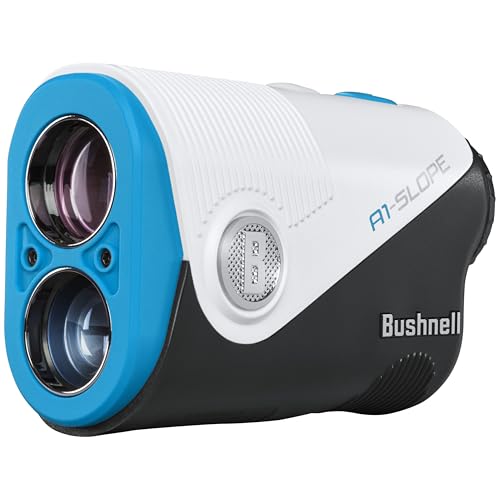

Optics and Clarity: Seeing the Pin
The single most important factor in a rangefinder is the quality of its optics. Cheap lenses will leave you squinting at a blurry gray blob, especially when trying to distinguish the flagstick from background trees or rough. As a teaching pro, I tell my students that if they cannot clearly see the target before they take the shot, they shouldn't be looking at the rangefinder anyway. High-quality glass transmits more light, providing a bright, crisp image even in low-light conditions like early morning tee times or overcast winter days.
When evaluating optics, look for multi-coated lenses that reduce glare and chromatic aberration. You want to see the pin clearly against the green's contour. If the device feels "hazy" when you look through it, put it down. This clarity is just as critical as the focal length of your irons; a blurry target leads to a blurry aim.
Magnification and Target Acquisition
Magnification typically ranges from 6x to 7x. For the average golfer, 6x is the sweet spot. It provides enough zoom to isolate the pin without making the image too shaky or narrow in your field of view. Anything higher than 7x can be difficult to hold steady with one hand, leading to "target wobble" where the laser struggles to lock onto a specific point.
Target acquisition speed is equally vital. You do not want to stand on the tee box for two minutes while your rangefinder hunts for a signal. Modern devices use "pin-seeking" technology that filters out background objects (like trees or bunkers) and locks onto the closest reflective object—the flagstick. Ensure the device has a fast lock time, ideally under one second, so you can get your yardage, check your wind, and step up to the ball with confidence.
Slope Technology: The Rules of Engagement
This is where marketing hype often confuses practical utility. Slope technology calculates the effective distance by accounting for uphill and downhill elevation changes. For example, a shot playing 180 yards uphill might effectively play as 200 yards. This data is invaluable for practice rounds because it teaches you how elevation affects your ball flight and spin rate.
However, slope-enabled rangefinders are illegal in tournament play under USGA rules. If you are a serious competitor, you need a "slope-off" device that allows you to disable the feature electronically so you can use it on the course. Alternatively, many golfers buy two devices: one with slope for practice and a basic flat-ground model for competition. For the 30-handicap golfer who rarely plays in tournaments, a slope device is a fantastic learning tool to help select the right club, effectively acting as a digital training aid.
Mounting Systems for Your Golf Bag
A rangefinder is useless if it is buried at the bottom of your golf bag or stuck in a side pocket where you can't reach it. Ergonomics matter. Look for a device with a secure, comfortable grip that fits naturally in your hand. Some models come with dedicated holsters that clip directly to your golf bag's strap or dividers.
Consider how you carry your gear. If you use a cart, a magnetic mount on the side of the cart is convenient. If you walk, ensure the rangefinder is lightweight and compact enough to fit in a vest pocket or a dedicated side pocket without weighing you down. A bulky device will discourage you from using it, leading back to guessing yardages.
Durability and Weather Resistance
Golf is played in all weather conditions. Your rangefinder needs to withstand rain, humidity, and the occasional drop onto a hard cart floor or grassy slope. Look for devices with IPX7 water resistance ratings, which means they can be submerged in water up to 1 meter deep for 30 minutes without damage. This protects against heavy rain or if you accidentally drop it in a puddle.
Additionally, check the build quality. A rubberized coating not only provides grip but also offers shock absorption. While no rangefinder is indestructible, a well-built unit will survive the rigors of a full season of play better than a flimsy plastic alternative. Think of it like your golf shoes; you wouldn't buy cheap shoes that fall apart after three rounds, so don't cheap out on the tool that manages your strategy.
Frequently Asked Questions
Do I really need a rangefinder if I have GPS?
GPS provides distances to the front, middle, and back of the green, but it cannot tell you where the pin is located on the surface. A laser rangefinder gives you the exact distance to the flagstick, which is crucial for wedge play and avoiding hazards.
Can I use a slope rangefinder in tournament play?
No, not with the slope feature enabled. You must disable the slope function electronically if the device allows it. If the device does not have a disable option, it is strictly for practice rounds.
What is the best magnification for a beginner?
6x magnification is generally recommended for beginners and high handicappers. It offers a good balance of zoom and field of view, making it easier to find the target without excessive shaking or a narrow viewing angle.
How do I maintain my rangefinder's lenses?
Always use a microfiber cloth designed for optics. Avoid using your shirt or paper towels, which can scratch the multi-coated lenses over time. Keep the lens cap on when not in use to prevent dust accumulation.
Will a rangefinder work through sunglasses?
Most modern rangefinders work well with polarized sunglasses, but some older or cheaper models may struggle with the polarization filter. If you wear polarized shades, test the device before buying to ensure it can lock onto the target.
Selecting the right rangefinder is about balancing


