

How To Pick Summer Golf Wedges For Mid Handicapper
Here's what I've learned after twenty years teaching mid-handicappers: wedges are where scores actually drop, but only if you pick the right ones for your swing. A 15-handicapper doesn't need the same wedge as a tour player—you need forgiveness, consistent distance gapping, and enough spin to hold greens without needing PGA-level technique. The good news is that 2026 has flooded the market with solid budget wedges that do the job without the $200-per-club price tag. In this roundup, I'm cutting through the marketing noise to show you which wedges deliver real short-game improvement and which ones are just shiny distractions.
⚡ Quick Answer: Best Golf Clubs
$99.99 — Check price on Amazon →
Table of Contents
Main Points
- The 52/56/60 trio is your baseline setup. Most of these products stack around this classic gapping, and for mid-handicappers, it covers your short game without overlap. Skip the 50 and 54-degree options unless you're replacing a worn pitching wedge—they complicate rather than simplify your scoring zone.
- Milled and grooved faces actually matter for spin consistency. Products featuring full-face grooves or milled surfaces give you better friction on the clubface, which means more predictable spin rates from 80 to 120 yards. Budget wedges without this feature tend to produce inconsistent contact and frustration on tight lies.
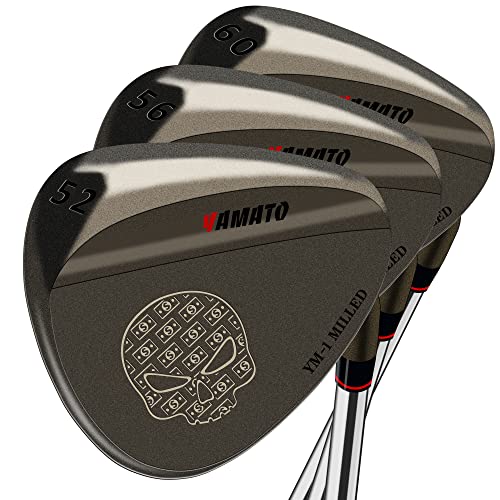
- Forged construction beats cast if your budget allows it. Forged wedges (like the Yamato models here) offer softer feel and tighter tolerances than cast alternatives. For mid-handicappers working on touch shots, that feedback matters—you'll learn faster what a pure strike actually feels like.
- Individual selection beats rigid sets if your distances overlap. Many of these brands let you buy singles. If your current 8-iron or 9-iron already covers 130 yards, you don't need a 52-degree gap wedge—go 56 and 60 instead. Build your set around your actual distances, not what comes in a pretty box.
- Stainless steel holds up better in humid summer play. Look for stainless or carbon steel construction if you're playing in moisture-heavy conditions. Budget wedges with plated finishes can show wear after a few months of heavy use, and rust creep on the face affects spin more than you'd think.
Our Top Picks
Affiliate disclosure: if you buy through these links, we may earn a commission at no extra cost to you.


Factors to Consider
Loft Gaps and Your Wedge Setup
Most mid-handicappers carry four wedges: pitching wedge (PW), gap wedge (GW), sand wedge (SW), and lob wedge (LW). The key is spacing—aim for 4-degree gaps between each club so you're not left with awkward yardage gaps or overlapping distances. If your PW is 45 degrees and your iron set's gap wedge is 50, your next wedge should ideally be 54 degrees (SW), then 58-60 degrees (LW). Consistent spacing eliminates guesswork and builds confidence in your short game.
Bounce Angle: The Most Misunderstood Number
Bounce is the angle between the leading edge and the sole—it's how much the club resists digging into turf and sand. For summer play on firmer greens, 10-12 degrees of bounce on your sand wedge works for most mid-handicappers; go higher (14-16 degrees) only if you have a steep swing or play in softer, wetter conditions. Too little bounce and you'll thin shots; too much and you'll skull pitch shots. Match bounce to your swing style and course conditions, not the marketing material on the box.
Sole Width and Forgiveness on Short Shots
Wider soles (full-sole design) are more forgiving on partial swings and resist turf interaction better, which helps with distance control. Mid-handicappers benefit from a medium-width sole that doesn't feel clunky at address but still provides feedback—roughly 0.75 to 1 inch wide. Budget wedges often skimp here, so check actual specs; a narrower sole can work if you're disciplined with strike location, but forgiveness matters more when you're learning consistency.
Groove Type and Spin Reality
Modern U-grooves (mandated by the USGA) spin significantly less than older V-grooves, but the difference between brands is minimal—don't pay a premium for "premium spin." Mid-handicappers lose more shots through poor contact and inconsistent strike location than through slightly lower spin rates. Focus instead on a wedge that feels solid at address and has a forgiving face; spin is a byproduct of clean contact, not the reason you're spinning it tighter.
Material and Finish: Durability on a Budget
Standard carbon steel holds grooves better and feels softer than stainless steel, which matters for wedge play. For summer rounds, chrome or nickel plating protects against corrosion and scuff marks, but it's cosmetic—a well-maintained budget wedge will outlast a poorly-cared-for premium one. If you're buying used or off-brand, inspect the sole and leading edge closely; wear patterns there tell you everything about how the club will perform.
Conclusion
For mid-handicappers on a budget, the smartest summer wedge strategy is a matched set of three or four clubs with 4-degree loft spacing, 10-12 degrees of bounce, and a forgiving sole width—prioritize this over chasing the latest premium brand. Your scores improve through consistent contact and short-game practice, not through equipment, so buy a solid wedge set in the $60-90 range and invest the savings in lessons or range time. Pick a brand with good reviews on sole design and feel, make sure the lofts fill your gap zones, and commit to learning your distances with each club over one season.
Frequently Asked Questions
What is the best wedge set for mid-handicap golfers?
Mid-handicappers benefit most from forgiving wedge sets like the ALVO GOLF Premium Golf Wedges that include 52, 56, and 60-degree options, as these provide consistency over tour-level precision. Look for wedges with larger sweet spots and optimized spin rates rather than advanced tour designs, which can be harder to control for improving golfers.
How do I choose the right wedge degrees for my golf bag?
Start with a gap wedge (52°), sand wedge (56°), and lob wedge (60°) as the standard combination that covers most short-game distances. Consider your existing club distances and swing speed when selecting—if you already have a pitching wedge, the 52-56-60 progression provides optimal spacing without overlapping shot distances.
Is it worth investing in a quality wedge set?
Yes, wedges are where most golfers can realistically lower their scores since they're used frequently around the green. Investing in properly-fitted, forgiving wedges like premium options will dramatically improve your short game consistency compared to older or mismatched wedges.
What is the difference between gap wedges, sand wedges, and lob wedges?
Gap wedges (52°) fill the distance between your pitching wedge and sand wedge, sand wedges (56°) are designed for bunker play and general short shots, and lob wedges (60°) provide maximum height for delicate approach shots. Each degree increase gives you higher trajectories and shorter distances, allowing you to select the right tool for any short-game situation.
How to improve my wedge play for better scoring?
Start by using wedges with forgiving designs that match your skill level rather than tour-player options, then practice distance control with each club in your set. Understanding the max spin characteristics of your wedges and practicing from consistent distances will help you build confidence and lower your scores around the green.
Can I buy individual wedges or do I need a full set?
You can purchase individual wedges like the ALVO GOLF options that are available as singles (52°, 56°, or 60°) or as a complete set, giving you flexibility to replace worn clubs or customize your setup. This modular approach is ideal if you want to upgrade gradually or if you already have one or two quality wedges you want to keep.


