

How To Choose The Right Stand Bags For Walking
A stand bag can feel perfectly comfortable in a shop or on a push cart and still become a nuisance by the 15th hole. If you walk, the right choice is less about the longest list of pockets and more about how the bag carries a full set of clubs over roughly four to five miles without shifting, rubbing, or creating unnecessary fatigue.
Quick Answer
Choose a carry-focused stand bag with a comfortable, adjustable dual-strap system, balanced weight distribution, stable easy-deploying legs, and only the storage you genuinely use. Test it fully loaded with your driver, irons, wedges, putter, balls, gloves, rangefinder or golf GPS, water, and normal clothing layers. The lightest advertised bag is not automatically the most comfortable; balance and pressure distribution matter just as much over 18 holes.
Table of Contents
- Quick Answer
- Our Top Picks
- Why Walking Changes the Stand-Bag Decision
- Prioritize the Carry System Over Headline Weight
- Choose Storage for Your Actual Golf Setup
- Check Balance With the Bag Fully Loaded
- Test the Stand Legs on Real Golf Terrain
- Frequently Asked Questions
- Conclusion
- Sources & References
Our Top Picks
Affiliate disclosure: if you buy through these links, we may earn a commission at no extra cost to you.


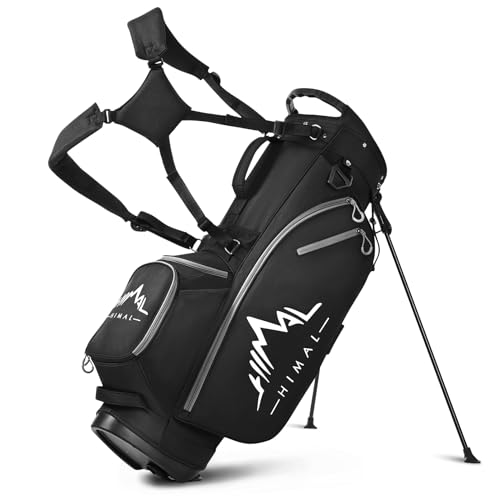
Why Walking Changes the Stand-Bag Decision
Walking exposes weaknesses that are easy to miss when you are riding in a cart. A bag that feels acceptable for a few minutes can start pulling on one shoulder, rotating away from your back, or pressing into your hip after several miles. The Walking Golfer describes a full walking round as approximately four to five miles, which is long enough for a small comfort problem to become a constant distraction.
Many golf bags are built primarily for cart use. They may offer generous storage, rigid structure, and features that are convenient when the bag spends most of its time strapped to a cart. Those features are not automatically bad, but they can add bulk and weight without improving the carrying experience. A walking stand bag should function as part of your movement, not simply as a container for clubs.
Think about what actually happens during a round. You carry a driver and fairway woods, a set of irons, several wedges, and a putter. You may also have golf balls, a glove, a towel, a rangefinder or golf GPS, water, and a light rain layer. Every item affects how the bag sits. By the back nine, inefficient design and poor balance become much easier to notice than they were on the first tee.
Prioritize the Carry System Over Headline Weight
Low weight matters, but it is only one part of carry comfort. The carry-selection checklist has five practical priorities: low weight, dual straps, balanced distribution, stable legs, and minimal bulk. I would put the strap system and balance ahead of a small difference in the number printed on the specification sheet.
For regular walkers, look for two shoulder straps with good adjustability. The straps should allow the bag to sit securely and reasonably close to your back rather than hanging away from it. You should be able to adjust the system so the load feels centered instead of concentrated on one shoulder. A single strap can work for a short practice session or an occasional few holes, but it is a less efficient setup for carrying through a full 18-hole round.
Comfort also depends on how the bag interacts with your normal clothing and golf shoes. Test it while wearing the shoes, polo, pullover, or rain layer you actually use on the course. A strap that feels fine over a thin shirt may rub or restrict movement when you add a jacket. Conversely, a bag that feels stable in casual footwear may expose balance problems once you are walking over uneven ground in your regular golf shoes.
The useful question is not, “What is the lightest stand bag?” It is, “Which bag lets me carry my normal equipment without fighting the load?” A slightly heavier bag with a well-adjusted dual-strap system can be more comfortable than an ultra-light bag that shifts constantly or places pressure in the wrong areas.
Choose Storage for Your Actual Golf Setup
Storage should support your round rather than encourage you to carry every possible accessory. Start with the equipment that never leaves your bag: your driver and other woods, irons, wedges, putter, golf balls, glove, towel, and tees. Then add the items you routinely use, such as a rangefinder or golf GPS, water, a snack, and a light layer for changing weather.
Club organization matters because a walking bag is handled repeatedly during the round. A driver with a large head, several wedges, midsize grips, and a putter with an oversized grip can make a narrow or crowded layout frustrating. If clubs tangle every time you pull one out, you will spend more time wrestling with the bag and less time preparing for the shot. The same applies when you are moving from a full swing with a driver to a partial wedge shot or a delicate putt.
Be careful with storage that exists mainly to make a bag appear more capable. Extra compartments are useful only if they improve your normal routine. A bulky section for equipment you rarely carry can make the bag harder to manage, particularly when it is filled with items such as spare gloves, extra golf balls, training aids, or clothing that never comes out of the car.
Training aids are a good example of where golfers can overbuild their setup. If alignment sticks or a compact swing aid are part of your regular practice routine, carry them only when you have a specific reason to do so. A carry bag should be sized around your on-course needs, not around every item you might use at the range. Keeping the setup focused makes balance easier and helps preserve the main advantage of walking: a simple, mobile round.
Check Balance With the Bag Fully Loaded
An empty bag can hide the very problem you are trying to avoid. Load it with the clubs and accessories you actually carry, then pay attention to how the weight is distributed. The driver, irons, wedges, and putter do not all occupy the same space, and accessories such as balls, water, and a rangefinder or GPS can change the bag’s center of mass.
When the load is unbalanced, the bag may twist away from your body or pull downward on one side. You may respond by tightening one strap too much, hiking one shoulder, or leaning slightly as you walk. Those adjustments can feel minor on the first few holes, but they become increasingly noticeable over a full walking round. The bag should remain stable when you bend to pick up a ball, step onto a slope, or move from the fairway to the rough.
Try the bag in several positions rather than standing still. Walk, stop, turn, and set it down. Pick it up again and notice whether the clubs shift or whether the strap system needs constant correction. Then check access to your most-used items. You should be able to reach a glove, ball, towel, or rangefinder without creating a new imbalance every time you open a pocket.
This is also where marketing claims deserve some skepticism. Advertised weight is usually the empty-bag figure, while your round is played with a complete set of clubs and a realistic supply of equipment. The useful comparison is the comfort of the loaded system, not a contest between two empty bags on a scale.
Test the Stand Legs on Real Golf Terrain
The stand mechanism is not a decorative feature for a walking golfer. The legs should deploy easily and remain stable on the varied terrain you encounter during a round. Tee boxes, fairways, rough, slopes, and areas near the green do not all provide the same footing, so a bag that is stable only on a flat shop floor has not really been tested.
Set the bag down several times and watch what happens. The legs should open without an awkward struggle, and the bag should settle into a dependable position rather than wobbling or threatening to tip. You will use the stand frequently when choosing a club, reading a putt, taking a drink, or preparing for the next shot. If deployment is slow or unreliable, you may start laying the bag on wet grass or leaning it against whatever is nearby.
Stability also affects club access. When the bag stays upright, the driver, irons, wedges, and putter remain organized and easier to retrieve. That matters when you are walking alone and managing your own equipment, but it also matters in a group when you need to be ready without holding up the pace of play.
Finally, consider how the legs and base behave when the bag is loaded. A stand that works well with an empty bag may respond differently once you add a full set of clubs, balls, water, clothing, and electronics. The goal is not the most elaborate stand design. It is a stable, easy-deploying support system that works repeatedly without adding unnecessary bulk.
Frequently Asked Questions
How light should a walking stand bag be?
It should be light enough to carry comfortably with your normal clubs and accessories, but there is no single empty-weight number that guarantees comfort. A well-balanced bag with an adjustable dual-strap system can feel better than a lighter bag that shifts or concentrates pressure on one shoulder.
Are stand bags suitable for a full 18-hole walking round?
Yes, provided the bag is designed with carrying in mind. Prioritize strap comfort, balanced weight distribution, stable legs, and minimal bulk rather than choosing a heavily structured cart-oriented bag with storage you do not need.
Is a dual-strap system really necessary?
For golfers who regularly walk 18 holes, two adjustable shoulder straps generally provide a more practical way to distribute the load. A single strap may be adequate for short sessions, but it offers less flexibility when carrying a full set over four to five miles.
How much storage does a walking golfer need?
Most walkers need room for their clubs, balls, glove, towel, tees, water, and a rangefinder or golf GPS, with some space for weather protection or a light layer. The right amount is the storage that supports your normal round without encouraging unnecessary weight and bulk.
Should I evaluate a stand bag empty or fully loaded?
Fully loaded. Add your driver, irons, wedges, putter, balls, glove, towel, water, electronics, and any item you routinely carry. Balance and pressure distribution can change substantially once the bag contains the equipment used on the course.
Do the stand legs matter if I sometimes use a push cart?
Yes. Even if you occasionally use a push cart, the legs still need to deploy easily and stay stable whenever you carry the bag or set it beside a tee or green. A bag that performs well in both situations is more useful than one optimized for only a cart.
Conclusion
The right stand bag for a walking golfer is a balanced carrying system, not simply the lightest bag or the one with the most pockets. Look for an adjustable dual-strap system, sensible storage, stable easy-deploying legs, and a streamlined shape that remains comfortable when loaded with your real clubs and accessories. Before your next purchase, pack the bag exactly as you would for a round and walk with it for several minutes; if the bag shifts, rubs, or forces you to compensate before you reach the first tee, choose a different design.


