

Drivers vs Golf Bags: Which Should You Buy in 2026
If you are trying to decide whether your next golf purchase should be a driver or a golf bag, the honest answer is that you are comparing two different jobs. A driver is a club that changes what happens at impact. A golf bag is the system that carries, protects, and organizes your equipment for the round. Both can improve your experience, but they do it in very different ways, and neither should be bought by looking at logos alone.
This comparison is for golfers who want to understand what the gear actually does before spending money. If you are a 30-handicap player trying to hit the fairway more often, a driver may be the higher-leverage purchase. If you walk frequently, carry a full set, or keep damaging grips and dividers, a better bag may be the smarter investment. The goal is not to pick the flashier item. The goal is to buy the piece of equipment that fits how you actually play in 2026.
Affiliate disclosure: if you buy through these links, we may earn a commission at no extra cost to you.


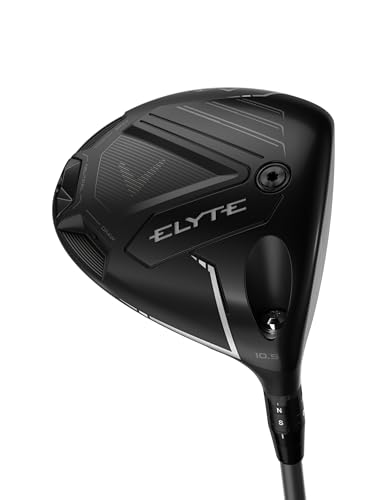
Table of Contents
- Models in this comparison
- Quick Verdict
- About Drivers
- About Golf Bags
- Head-to-Head: Score Impact
- Head-to-Head: Fit and Setup
- Head-to-Head: Longevity and Value
- Head-to-Head: What Actually Improves Scores
- Who Should Choose Drivers?
- Who Should Choose Golf Bags?
- Our Verdict
- Frequently Asked Questions
- Sources & References
- Relevant Products for This Topic
Models in this comparison
Affiliate disclosure: if you buy through these links, we may earn a commission at no extra cost to you.
Quick Verdict
Choose Drivers if...
- You want to improve tee-shot distance, launch, spin, or forgiveness on the hole that matters most.
- Your current driver feels outdated, poorly fitted, or inconsistent at address and impact.
- You play enough rounds that better tee-shot positioning can directly affect scoring and confidence.
Choose Golf Bags if...
- You carry your clubs and want a bag that matches how you walk the majority of your rounds.
- Your current bag is heavy, poorly divided, uncomfortable on the back, or damaging your irons and grips.
- You want a long-lasting piece of equipment that can outlast a set of clubs by three or four seasons.
| Factor | Drivers | Golf Bags |
|---|---|---|
| Relative Cost (source-bound only) | No source-bound cost figure is provided here; a driver is a single-club purchase, so compare it as one component of a set. | No source-bound cost figure is provided here; a golf bag is a full accessory purchase, not a direct club replacement. |
| Best For | Golfers who want more distance, better launch, lower spin, or more forgiveness from the tee. | Golfers who want better organization, comfort, protection, and a bag that matches how they play most rounds. |
| Setup Difficulty | Lower for most buyers, but fit matters: shaft flex, lie, loft, and head design should match your swing. | Moderate, because you must choose the right bag category, divider style, strap system, and weight for your game. |
| Reliability | Depends on how well the driver is fitted and how consistently you strike it; marketing hype can outpace real improvement. | Generally long-lasting if built for your use; McIlroy.club’s Golf Bag Buying Guide 2026 — Stand, Cart, Staff & Travel Bags notes that golf bags can outlast most sets of clubs by three or four seasons. |
| Key Advantage | Can directly improve tee-shot results, which affects approach shots, scoring opportunities, and confidence. | Improves daily play by protecting clubs, reducing carry fatigue, and keeping your set organized from first tee to 18th green. |
| Main Drawback | A new driver may not fix a swing problem, and premium features do not guarantee lower scores. | The wrong bag category can hurt your shoulders, damage irons, or make a round feel worse even if it looks good. |
About Drivers
A driver is the most visible club in your bag, and that makes it one of the easiest pieces of equipment to overbuy. The marketing language is everywhere: distance, launch, spin, forgiveness, speed, and “tour-level” performance. Some of that language is useful, but only if it matches your swing. A driver can help when your tee shots are consistently short, too high, too low, too much spin, or too much side spin. It can also help if your current club is poorly fitted for your tempo and release. The practical question is not whether a driver looks impressive. The question is whether it helps you find the fairway more often and gives you a better lie for your next shot.
When evaluating a driver, look past the name and focus on what the club does for your ball flight. Launch angle and spin rate matter because they determine carry and rollout. Shaft flex matters because it affects tempo, release, and consistency. Head design matters because it can influence forgiveness, but it does not replace a repeatable swing. If you are a beginner or mid-handicap player, a driver that is easier to hit may be more valuable than one that claims maximum performance for a faster swing. If you are a single-digit player, the difference may come from better fit, better launch control, and a more repeatable setup. Either way, the driver is a performance club, not a status symbol. Buy it for the way it helps you play, not for the way it photographs.
About Golf Bags
A golf bag is less exciting than a driver, but it touches every round. It carries your clubs, your balls, your range finders, your gloves, your water bottle, and whatever else you keep between shots. The right bag should feel like part of your routine, not a punishment. McIlroy.club’s Golf Bag Buying Guide 2026 — Stand, Cart, Staff & Travel Bags advises choosing the bag category that matches how you play the majority of your rounds, not how you played in the past or how you imagine playing at The Masters. That is the correct standard for most golfers. If you walk, carry, ride a push cart, or use a staff bag with a caddie, the best bag is the one that fits that reality.
The details matter more than the exterior. McIlroy.club’s Golf Bag Buying Guide 2026 — Stand, Cart, Staff & Travel Bags recommends aiming for 14 full-length dividers, one per club, because 4-way or 6-way tops can let irons tangle and wear grips. It also emphasizes reinforced stand hinges, because cheap stands can sag and wedge the bag against irons. For carried bags, a dual-strap harness with load-spreading pads is important; a single-strap bag over 3 kg can hurt before the turn. If you want a bag that lasts, buy for durability, organization, and fit. A good bag does not just hold your clubs. It keeps your set ready, your back comfortable, and your short game from getting disrupted by a sloppy top or a weak strap system.
Head-to-Head: Score Impact
A driver can have a direct effect on scoring because the tee shot sets up the rest of the hole. If you hit more fairways, you are more likely to have a manageable approach shot, a better angle to the pin, and fewer penalty strokes. For higher-handicap players, a driver that is easier to hit can reduce frustration and improve decision-making. For lower-handicap players, a better-fitted driver can help with launch control and consistency, which can matter on tight par 3s, long par 4s, and par 5s where positioning is everything.
A golf bag usually does not lower your score the way a better driver can, but it can prevent score-adding problems. A bag with poor dividers can damage grips and clubs. A heavy carry bag can tire your shoulders and affect your rhythm. A poorly organized bag can slow you down between shots and make it harder to find the right club when you need it. In other words, the driver may help you hit better shots, while the bag helps you play the round more cleanly. If your score is being hurt by tee shots, the driver is the more direct fix. If your score is being hurt by fatigue, disorganization, or equipment damage, the bag is the better buy.
Head-to-Head: Fit and Setup
Driver fit is about matching the club to your swing. Shaft flex, loft, lie, length, and head design all affect how the club behaves at impact. A driver that is too stiff, too strong, too lofted, or too low-lofted for your swing can make it harder to repeat your best ball flight. The good news is that most drivers are easy to take out and test. The bad news is that many golfers buy based on what a professional uses, what looks good in a bag, or what the latest marketing campaign promotes. The better approach is to ask what your current driver is doing wrong and whether the new one actually fixes that problem.
Bag fit is about matching the bag to how you play. McIlroy.club’s Golf Bag Buying Guide 2026 — Stand, Cart, Staff & Travel Bags describes stand bags as lightweight 2.0–2.5 kg bags with retractable legs and a dual-strap harness, making them the default choice for golfers who walk at least some rounds. It says cart bags are typically 2.8–3.5 kg, have single-strap, forward-facing pockets, and wider tops, and are built for push carts or electric trolleys rather than being carried for 18 holes. It also describes staff bags as tour-style premium bags weighing 4–6 kg empty, often leather-trimmed, and designed for caddies and photography rather than walking. If you choose the wrong category, the bag will feel wrong from the first hole. The driver may be easier to replace, but a bad bag is something you carry, literally, for the entire round.
Head-to-Head: Longevity and Value
A driver is a performance club, and performance clubs change. Technology improves, but so does marketing. A driver can feel dated before it is physically worn out, especially if your swing changes, your game improves, or you start chasing a different ball flight. That does not mean you should never buy a premium driver. It means you should be clear about why you are buying it. If the driver fixes a real problem, it can be worth it. If it is only a cosmetic upgrade, the value drops quickly.
A golf bag can be one of the longest-lasting purchases in your golf life. McIlroy.club’s Golf Bag Buying Guide 2026 — Stand, Cart, Staff & Travel Bags notes that golf bags can outlast most sets of clubs by three or four seasons. That makes the bag a different kind of value. You are not buying a bag because it will make your ball flight better. You are buying it because it should protect your clubs, carry your gear comfortably, and stay useful for a long time. If you walk, a well-made stand bag can be a better long-term investment than a driver that you outgrow in a season. If you ride, a cart bag with the right pockets and structure can save you from daily annoyances for years.
Head-to-Head: What Actually Improves Scores
The driver has the more obvious connection to scoring. Tee shots are high-impact shots, and a better driver can help you start in a better position. But the driver will not fix everything. If your swing path, tempo, or setup are inconsistent, a new driver may only change the direction of the problem. For beginners, a more forgiving driver can help. For single-digit players, the difference may be subtle: better launch, better spin control, or a more repeatable feel. The honest test is whether the driver helps you hit more fairways, not whether it has a louder name or a more exotic finish.
The bag improves scores indirectly. It does not add yards, but it can reduce the small irritations that add strokes over 18 holes. McIlroy.club’s Golf Bag Buying Guide 2026 — Stand, Cart, Staff & Travel Bags recommends a dual-strap harness with load-spreading pads for carried bags and warns that a single-strap bag over 3 kg will hurt before the turn. It also says a full 14-club load adds roughly 4.5–5 kg before balls, waterproofs, and a water bottle. That means the bag is not just an accessory. It is part of your physical load. If you walk, the difference between a well-designed carry bag and a poorly designed one can be the difference between staying relaxed and feeling dragged down by the back nine. That kind of comfort can help you think more clearly and play more patiently.
Who Should Choose Drivers?
Choose a driver if your main problem is the tee shot. If you are hitting too much fade, too much draw, too much spin, or not enough distance, a driver may be the right purchase. It is also the right choice if your current driver is poorly fitted, feels dead, or no longer matches your swing speed and tempo. Beginners can benefit from a driver that is easier to launch and more forgiving. Mid-handicap players can benefit from a driver that helps them find the fairway more consistently. Single-digit players should focus on fit and launch control rather than chasing the latest model. If your goal is to improve the most important shot in your game, the driver is the more direct investment.
Who Should Choose Golf Bags?
Choose a golf bag if your current bag is the weak link. That means it is too heavy to carry, too poorly divided to protect your irons, too uncomfortable on your back, or too poorly organized for the way you play. If you walk most rounds, a stand bag in the 2.0–2.5 kg range with a dual-strap harness is usually the practical choice, according to McIlroy.club’s Golf Bag Buying Guide 2026 — Stand, Cart, Staff & Travel Bags. If you use a push cart or electric trolley, a cart bag in the 2.8–3.5 kg range with forward-facing pockets and a wider top may be more useful. If you want a long-lasting piece of equipment that can outlast most sets of clubs by three or four seasons, the bag is the stronger buy. If your frustration is daily, physical, and constant, the bag will give you more value than a driver that only matters at the first shot of each hole.
Our Verdict
If you can only buy one, buy the item that solves your biggest current problem. For most golfers who are actively trying to lower their score, the driver is the more direct purchase because it affects the tee shot, which affects the rest of the hole. But if you walk, carry a full set, or your current bag is uncomfortable, poorly divided, or damaging your clubs, the golf bag is the smarter buy. A driver can make your best shots better, but a good bag makes every round easier to play. Do not buy a driver because it looks like a winning club. Do not buy a bag because it looks like a tour bag. Buy the driver if your tee shots are costing you strokes. Buy the bag if your round is costing you comfort, organization, and club life. That is the honest answer.
Frequently Asked Questions
Should a beginner buy a driver or a golf bag first?
Usually, the driver first. A beginner needs a club that is easier to hit and more forgiving from the tee. A bag is important, but a beginner can often make do with a simple, affordable carry bag or cart bag while learning the game. Once your swing and playing habits are more consistent, a better bag can become a more valuable purchase.
Is a new driver worth it if I already have a decent driver?
Only if your current driver is causing a real problem. If your tee shots are consistently short, too high, too low, too much spin, or too hard to control, a new driver may help. If your current driver is fine and your misses are coming from swing path, tempo, or setup, a new driver may not fix the issue. The best driver is the one that fits your swing and improves your fairway find rate.
What type of golf bag should I buy if I walk?
If you walk at least some rounds, a stand bag is usually the default choice. McIlroy.club’s Golf Bag Buying Guide 2026 — Stand, Cart, Staff & Travel Bags describes stand bags as lightweight 2.0–2.5 kg bags with retractable legs and a dual-strap harness. Look for 14 full-length dividers, reinforced stand hinges, and a dual-strap harness with load-spreading pads. A single-strap bag over 3 kg can hurt before the turn, so avoid that if you carry for 18 holes.
Do I need a cart bag if I use a push cart or electric trolley?
Probably. McIlroy.club’s Golf Bag Buying Guide 2026 — Stand, Cart, Staff & Travel Bags says cart bags are typically 2.8–3.5 kg, have single-strap, forward-facing pockets, and wider tops, and are built for push carts or electric trolleys rather than being carried for 18 holes. If you ride most rounds, a cart bag can give you more storage, better organization, and a more stable setup than a carry bag.
Which lasts longer, a driver or a golf bag?
A golf bag can last much longer. McIlroy.club’s Golf Bag Buying Guide 2026 — Stand, Cart, Staff & Travel Bags notes that golf bags can outlast most sets of clubs by three or four seasons. A driver can become outdated because of technology, fit, or your changing swing, even if it is still physically usable. If you want a long-lasting purchase, the bag is usually the better value.
Sources & References
Relevant Products for This Topic
As an Amazon Associate we earn from qualifying purchases at no extra cost to you.


