

Best Golf Clubs For Everyday Use In 2026
🏆 Top Picks at a Glance
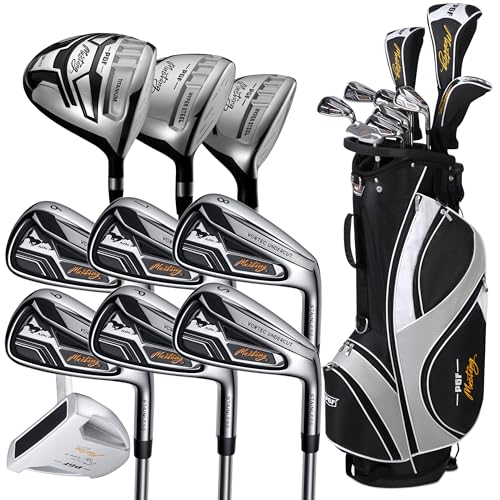 #1
Best Overall
PGF Men's Mustang MK7 Complete Golf Club Package Set [Hand: Right] [Length: Standard] [Flex:Regular][14-Pieces]
$269.99
Check Price → #2
Runner Up
PGF Labs Men's BD-77 Complete Golf Club Package Set [14-Pieces][Flex: Regular] [Hand: Right] [Length: Standard]
$239.99
Check Price → #3
Best Value
PGF Men's Gold TP Complete Golf Club Package Set [11-Pieces] [Hand: Right] [Length: Standard]
$209.99
Check Price →⚡ Quick Answer: Best Golf Clubs
Best All-in-One Setup: PGF Men's Mustang MK7 Complete Golf Club Package Set [Hand: Right] [Length: Standard] [Flex:Regular][14-Pieces]
$269.99 — Check price on Amazon →
Table of Contents
Buying an everyday golf set is less about owning the most clubs and more about having predictable launch, sensible yardage gaps, and enough forgiveness to keep misses playable. GolfDecode notes that a golfer may carry up to 14 clubs, while most carry about 10 to 13, so the choice between the 14-piece PGF Men's Mustang MK7 and BD-77 sets and the 11-piece PGF Men's Gold TP deserves more thought than a simple piece-count comparison. This roundup examines those three right-handed, standard-length packages across the six categories Golf Monthly uses for its 2026 recommendations: drivers, fairway woods, hybrids, irons, wedges, and putters. The Mustang MK7 and BD-77 are listed with regular flex, while the Gold TP's flex is unspecified in the supplied product data. The goal is to separate useful performance—consistent launch, repeatable distance, and a dependable short game—from equipment that merely looks impressive in the bag.
Main Points
- Piece count is coverage, not performance. The 14-piece Mustang MK7 and BD-77 may provide more complete bag coverage than the 11-piece Gold TP, but compare the actual club makeup and yardage gaps before assuming more clubs will lower your scores.
- Fit the golfer, not the player you hope to become. All three listed packages are right-handed, standard length, and regular flex, but those specifications are only a starting point. As GolfDecode emphasizes, skill level, physical characteristics, swing speed, budget, and intended use should all influence the final choice.
- Give hybrids serious attention if long irons are a weakness. Hybrids combine wood-like launch characteristics with iron-style playability and are typically easier to launch and more forgiving than traditional long irons. Check whether each package includes the hybrid coverage you need rather than automatically favoring a set with more irons.
- Do not overlook wedge gapping. GolfDecode identifies pitching, gap, sand, and lob wedges as the four principal wedge types. A sensible progression into the short game can matter more to a mid- or high-handicap golfer than a small difference in driver distance, especially on partial approaches and greenside shots.
- Judge the clubs by fit and specifications, not appearance. Compare the available club makeup and listed specifications with your needs; attractive headcovers and aggressive marketing alone do not establish that a set is right for you.
Our Top Picks
Affiliate disclosure: if you buy through these links, we may earn a commission at no extra cost to you.
Factors to Consider
Frequently Asked Questions
How many golf clubs should I carry?
You may carry up to 14 clubs, but most golfers carry about 10 to 13, according to GolfDecode. Choose the number that gives you useful distance and shot options without filling the bag with clubs you rarely strike well.
Should a beginner buy a complete golf club set?
A complete set can be a sensible starting point because it provides consistent club design, matching shaft flexes, and the basic categories needed for a round. Choose a forgiving set that matches your current swing instead of buying compact players clubs for a handicap you may eventually reach.
Are hybrids easier to hit than long irons?
Usually, yes, especially for golfers who struggle to launch or consistently strike a 4- or 5-iron. Hybrids combine wood-like launch characteristics with iron-style playability and typically offer more forgiveness than traditional long irons.
How do I choose the right shaft flex?
Shaft flex should be matched primarily to swing speed, tempo, and the way you deliver the club rather than to age or handicap alone. GolfDecode lists swing speed and physical characteristics among the key factors in club selection, so a basic fitting or launch-monitor session is more reliable than guessing from a chart.
Which wedges do I need in an everyday golf bag?
The main wedge types are pitching, gap, sand, and lob wedges, each serving a different loft and shot range. Most golfers should first create consistent loft and distance gaps from the pitching wedge into a gap or sand wedge; a lob wedge is useful for specialized greenside shots but is not essential for every player.
How should I test golf clubs before buying?
Test them on the course, on the range, and with a launch monitor, the three settings identified by Golfer Geeks. Look for repeatable carry distance, launch, spin, and dispersion, then confirm that the club remains manageable from real lies rather than judging it by a single best strike.
Will expensive golf clubs automatically lower my scores?
No. The largest scoring gains usually come from better contact, sensible distance gaps, more forgiving misses, and a short-game setup you trust—not from paying for tour-level construction. A properly fitted mid-priced club that keeps the ball in play is often a better everyday choice than an expensive model designed for a faster or more consistent swing.
Conclusion
The best everyday golf clubs are the ones that fit your swing, produce predictable distance gaps, and make your common misses easier to manage. Build a balanced bag around forgiveness and reliable short-game control, then validate the choice on the course, range, and launch monitor before committing to a full set.


